
The Reality of the Black Vikings.
For centuries, Norse sagas, chronicles, and genealogies recorded Vikings whose black complexion was notable enough to be preserved by name.
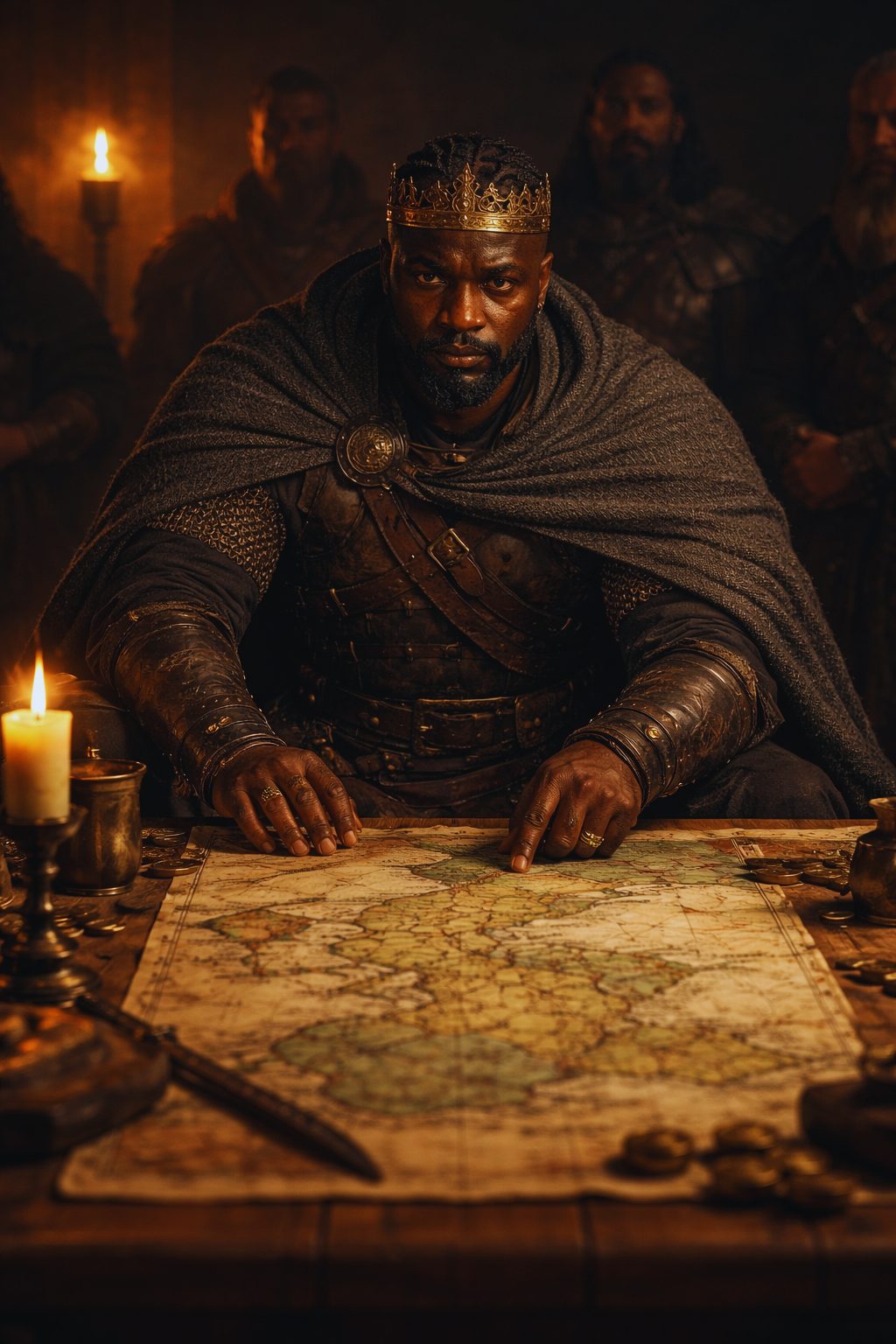
These were not metaphors. They were not symbolic nicknames. They were physical descriptions recorded by the people who knew them.
Long before modern reinterpretations, Viking society openly documented warriors, poets, nobles, and kings described as black, dark-skinned, or swarthy.
Named Black Vikings in the Historical Record.
Norse sources preserve numerous individuals whose epithets clearly reference complexion:
- Halfdan the Black: A foundational Norse ruler remembered explicitly for his dark appearance.
- An the Black
- Bjorn the Black
- Geirmund Hjorsson “Dark-Skin”
- Hermund Illugason the Black
- Illugi Hallkelsson the Black
- Rokar the Swarthy
- Sandulf the Black
These names appear alongside lineage, deeds, and status, not as curiosities, but as recognized figures within Norse society.
Black Kings of the Norse World.
Dark-complexioned rulers were not confined to minor roles. They sat on thrones.
- Harald II Svarte (the Black) King of the Isle of Man, c. 1034 to 1052
- Godfred V the Black King of the Isle of Man, 1153 to 1158 and 1164 to 1187
- Olaf II Odhar the Black King of the Isle of Man, 1229 to 1237
These were sovereign rulers whose reigns are documented in Norse and regional records.
The Isle of Man and Norse Legacy.
The Norse presence in the Irish Sea left lasting institutions.
Grey Abbey Monastery, founded in 1193 on Strangford Lough in Ulster, was established by Affreca, daughter of Godred, Norse King of the Isle of Man, and wife of Norman knight John de Courcy.
This site stands as physical evidence of Norse royal continuity: not legend, but architecture.
Black Poets and Intellectuals of the Viking World.
Dark-complexioned Norse figures were also celebrated as poets and thinkers:
- Ottar Svarti (the Black): Icelandic poet in the service of King Olaf Haraldsson
- Thorbjorn Skakkaskald: A black Icelandic poet serving Earl Rognvald
Poets were cultural elites in Viking society. Their appearance was recorded because it mattered.
Black Vikings in the Sagas.
The sagas describe dark-skinned Vikings in vivid detail.
Egil Skalla-Grímsson (c. 910 to 990 CE), a Norwegian who emigrated to Iceland, was described as black, dark-featured, and physically imposing, like his father Grim and grandfather Kveld-Ulf.
He was a warrior, poet, farmer, and central saga figure.
Thorhall, huntsman and steward to Erik the Red, was described as:
“A large black man, like a giant… strong, overbearing, and taciturn.”
From The Expedition of Thorfinn Karlsefni (1007 to 1011), Thorhall is remembered as black, powerful, and formidable, not marginal, but integral to Norse exploration.
What This Tells Us.
These descriptions appear because Viking society recorded what it could see.
Black and swarthy were not insults. They were not metaphors. They were identifiers.
The later erasure did not come from the sagas. It came from reinterpretation centuries afterward.
Why This Matters.
The idea of a uniformly pale Viking world does not come from Norse sources.
It comes from later retellings.
The original record is still there, in names, sagas, coins, and stone.
The Black Vikings were never hidden.
They were remembered, until history decided not to remember them anymore.
This is The Swarthy Channel!
If this work matters to you, join the $1 Swarthy Circle. One dollar a month keeps this channel independent. Join on Patreon
Get The Swarthy Scroll
New articles, shorts and the sources behind them, in your inbox. Free.
Subscribe to The Swarthy Channel for more forgotten empires, erased rulers, and untold history.